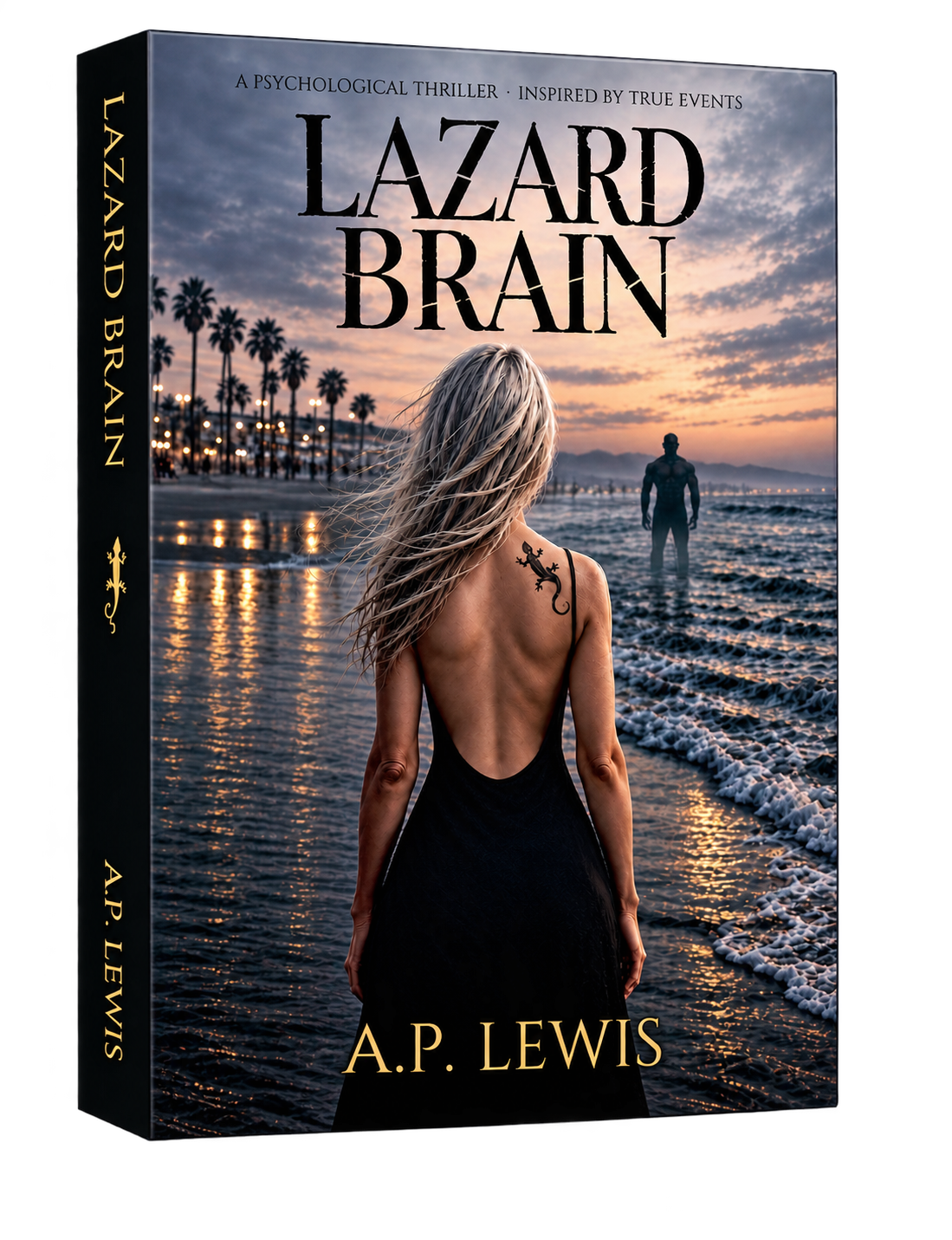
 For years, A.P. Lewis made other people's dreams come true. She wrote books for celebrities, doctors, and friends, and she took quiet satisfaction in watching someone hold a finished copy of the story they'd always wanted to tell. Her name never appeared on the cover. She was fine with that.
Then she wrote one for herself. LAZARD BRAIN, a psychological thriller inspired by a true story, is the first book she's releasing as her own, and it asks a lot of its author: no flattery, no hiding, and no softening of the parts that hurt.
Why Writing for Yourself Is Harder
Ghostwriting comes with a map. A client supplies the guidelines, and the writer's job is to follow them well. Writing your own life offers no such comfort. Lewis compares it to having a baby: it's personal, it's yours, and you can't be biased about it. You have to tell the truth, including the parts that don't flatter you.
So she did. LAZARD BRAIN is built on hundreds of real text messages, quoted word for word, typos included. The messages that cast the author in a poor light stayed in the book. Readers get the full record and make up their own minds.
For a writer whose career depended on adapting to other voices, finding her own took a different approach. She meditates on one character at a time until she can think as that person, rereads the story until she can recite the lines aloud, and shuts out distractions for months so the cast stays clear in her head. She doesn't dictate how the book will turn out. Her job, as she puts it, is to refine the literature, not to force it.
Two Rules for Getting It Finished
Lewis has watched talented people stall. One client, a doctor, keeps re-editing a manuscript that's long since ready. She tells him it can't get any more perfect, and he won't let go. She knows the feeling, since she's a perfectionist herself, and her cure is a simple standard: quality over quantity, then done.
Her second rule is about who reads your draft. Friends and family, she's learned, tend to soften their feedback to protect your feelings. Strangers don't, and an honest stranger will teach you more than a kind relative. She puts her work in front of people who have no reason to spare her.
She also learned the cost of waiting. Her first book, she says, was finished and then shelved, because she was afraid of how the world would see it, and how it would see her. This time she decided the world had to know about this one. Her message to other writers is blunt: don't just talk about it, finish it and get it out there.
A Publisher for Books That Won't Behave
Releasing a book this raw required a home that wouldn't flinch. Lewis built Manuscript Miscreant Publishing, an independent imprint whose motto is "Some stories refuse to behave." It's meant for authors who don't want to censor themselves and still want a real platform.
The need is practical. LAZARD BRAIN carries strong profanity and sexual content, and some payment processors wouldn't work with her because of it. She had to find a service that allows explicit language. The marketing materials take a measured approach: the social trailer is bleeped, so viewers know what to expect, while the finished audiobook stays uncensored.
Building the Audiobook
The audiobook runs 12 hours and 8 seconds with a full cast of AI-assisted voices. Lewis picked each voice from memory, based on the real people behind the characters, and chose a tool that gave them feeling instead of a flat read. She'd rather have professional actors play the roles, and she plans to redo the trailer that way if the book takes off. For a first release on a limited budget, she did the best she could, and she's honest about that.
The Message Behind the Mystery
At its core, LAZARD BRAIN asks who the villain really is, and looks at why people stay in relationships that harm them. Its takeaway for listeners is self-love. We spend years learning to be kind to others, Lewis says, and forget to include ourselves.
She keeps her face out of the project, and she wants the work to speak for itself. If it helps even one person feel less alone, or helps another writer finish what they started, she considers it worthwhile.
Preview LAZARD BRAIN at lazardbrain.netlify.app, and watch the introduction on TikTok. No release date or price has been announced yet.
LAZARD BRAIN is for adult audiences. It includes strong profanity, sexual content, domestic violence themes, and some gore. It's entertainment and isn't clinical advice. If this story sounds like your own life, the National Domestic Violence Hotline in the US is 1-800-799-7233.